BlazeTV host Allie Beth Stuckey and progressive political commentator Monte Mader clashed in a Jubilee “Face Off” debate that moved quickly from hot-button politics to a deeper question: who gets to define Christian moral authority?
According to Blaze News’ account of the debate, Mader approached the discussion as a critic of the conservative Christian worldview she once embraced. Stuckey defended her views from a biblical Christian perspective.
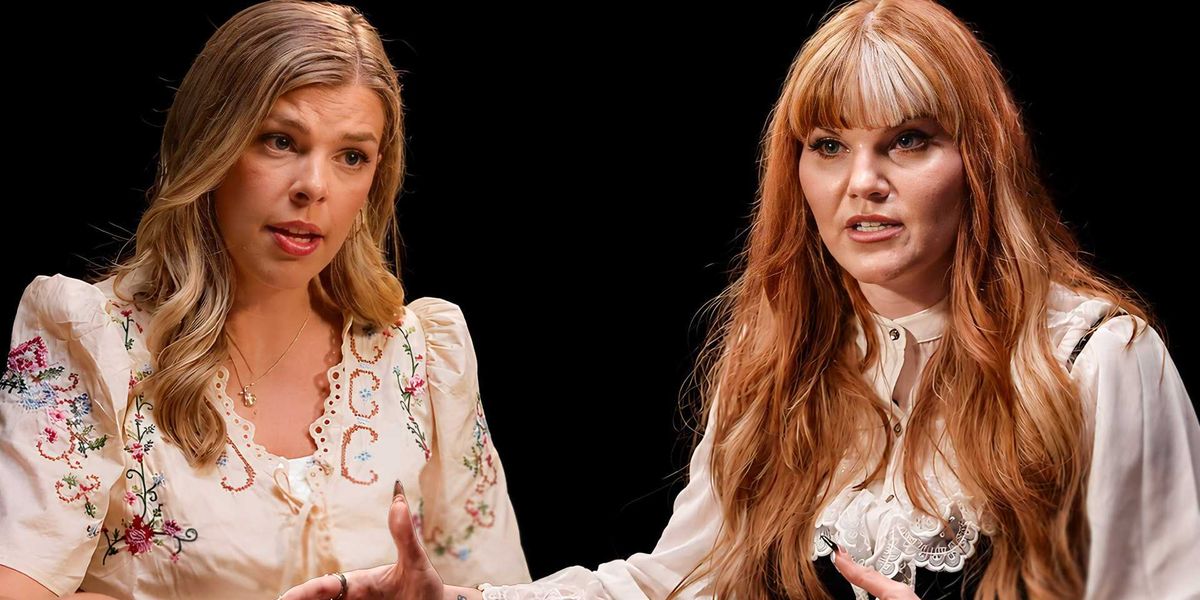
The hour-long exchange centered on four major claims: whether Christians must oppose abortion, whether feminism or patriarchy aligns with Christ’s teachings, whether Christians can affirm same-sex marriage, and whether America can properly be called a Christian nation.
Abortion Fight Turns on Personhood
The debate opened with Stuckey’s argument that Christians must oppose abortion. Mader challenged that view by pointing to historical disagreements among Christians and arguing that bodily autonomy gives a woman the right to decide whether to continue a pregnancy.
Stuckey rejected the idea that disagreement in church history settles the moral question.
“I’m really not interested in all of the people throughout church history who were wrong about a number of things,” Stuckey said, according to Blaze News. “My argument is that killing an innocent person is always wrong.”
For Stuckey, the central issue was whether the unborn child is a person. She argued that drawing the line after conception creates an arbitrary standard for deciding which human beings have rights.
“I think the morally safest, and of course the biblically safest too, position is to say, ‘You know what? All human beings no matter how small, no matter how young, no matter their location, are people that have rights,’” Stuckey said.
Mader, by contrast, continued to frame the issue around bodily autonomy, arguing that the developing life in the womb does not override the rights of the woman carrying it.
Feminism, Patriarchy and Church Authority
The second portion focused on Mader’s claim that patriarchy, not feminism, conflicts with Christ’s ministry and teaching.
Both participants agreed that Jesus elevated the dignity of women and that Christianity should not be used to excuse abuse. Their disagreement was over whether biblical distinctions between men and women create inequality.
Stuckey described herself as a traditional complementarian and affirmed the teaching in Ephesians that husbands and wives have distinct roles. Mader argued that complementarianism can produce unequal power structures, especially in churches that reserve spiritual authority for men.
The discussion eventually circled back to abortion and Stuckey’s critique of modern feminism.
“We disagree on abortion being a civil right, and that is exactly why you see the demonization of feminism because your equality boils down to the right to kill your child inside the womb,” Stuckey told Mader, according to Blaze News.
Same-Sex Marriage Brings the Clearest Divide
The debate’s sharpest theological split came during the segment on same-sex marriage.
Stuckey argued that Christians cannot affirm same-sex marriage as morally good while remaining consistent with Scripture. She distinguished that claim from the separate question of how government should regulate marriage.
“My claim is not even about the legislation of same-sex marriage,” Stuckey said.
She argued that it is not “biblically viable” for a Christian to support the idea that same-sex marriage is “moral and good and right and holy.”
Mader challenged Stuckey’s interpretation of Scripture, pointing to different forms of marriage in the Old Testament and noting that Jesus’ statement about a man and woman becoming one flesh came in response to a question about divorce.
Stuckey later clarified that she was not saying Christians who affirm same-sex marriage cannot be saved.
“You can’t be a Christian and affirm same-sex marriage and be correct,” Stuckey said, adding that Christians will ultimately discover they were wrong about some theological questions.
Stuckey cited Genesis, Jesus’ teachings, Romans 1, 1 Corinthians 6 and Ephesians 5 while defending marriage between one man and one woman as the consistent biblical model.
Should Christianity Shape American Law?
The final section shifted to Christianity’s role in American public life.
Mader argued that America is “not and will never be a Christian nation.” She defined Christian nationalism as the belief that the United States is fundamentally Christian and that government should promote Christian identity and values through civil life and legislation.
Stuckey agreed that America has no established national religion and affirmed separation of church and state. But she rejected the idea that Christians should separate their worldview from politics.
“It’s impossible to create a law outside of a moral worldview,” Stuckey said.
She argued that every voter brings moral assumptions to political decisions and that Christian beliefs should not be uniquely barred from the public square.
“Christians also have the right and the responsibility to bring the fullness of our worldview into the public square, into the voting booth,” Stuckey said.
Mader countered that religious freedom also means protecting Americans from having someone else’s religious convictions imposed on them through government.
The discussion returned again to abortion and gender, with Mader arguing that progressive positions can be grounded in science and data rather than religious doctrine. Stuckey disputed the idea that progressive politics are neutral or free from worldview assumptions.
“Either everyone can bring the fullness of their worldview into legislation and we duke it out and see what wins, or no one can,” Stuckey said.
The Real Divide: Scripture’s Authority
While the debate covered several political flashpoints, the underlying conflict was broader than any one issue.
Mader challenged conservative Christian interpretations from outside the faith tradition she once embraced, appealing to historical context, bodily autonomy, civil liberties and modern views of science and sexuality.
Stuckey repeatedly returned to Scripture as binding authority for Christians, even when its teachings conflict with prevailing cultural views.
That divide carried directly into politics. Mader argued that separation of church and state should prevent religious convictions from being imposed through law. Stuckey argued that no political movement legislates from a worldview-free position and that Christians have the same right as anyone else to bring their convictions into public life.