A legal setback has not ended the Tohono O’odham Nation’s fight against a planned 62-mile border infrastructure project in southern Arizona.
Customs and Border Protection Commissioner Rodney Scott said the agency will move forward with the Tucson 5 project after a federal judge denied the tribe’s request for a preliminary injunction earlier this month, according to the source report.
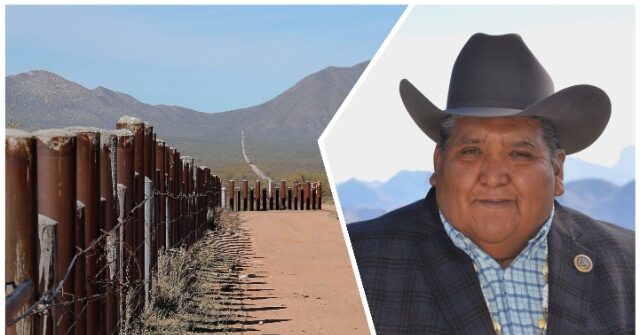
The tribe, however, is warning contractors that they cannot use tribal land to reach the project area without permission.
Tribe Warns Contractors Over Access
At a Monday media event at Quitobaquito Springs, Tohono O’odham Nation Chairman Verlon Jose appeared with U.S. Rep. Adelita Grijalva, D-Ariz., as part of a continued push to stop the project.
Jose said contractors who enter reservation lands without going through the Nation’s permitting process will be treated as trespassers.
“If contractors come without following the nation’s permitting processes, they are trespassing, and we will not stand for that,” Jose said, according to the Tucson Sentinel report cited in the source material.
The Sentinel also reported that the tribe installed “no trespassing” signs across the reservation aimed at contractors attempting to enter tribal lands. Jose said police officers and rangers had escorted contractors off the reservation seven times since the signs were installed earlier this month, according to that report.
Judge Rejected Request to Halt Project
The tribe sued the Department of Homeland Security in June, alleging that the project would diminish the boundaries of the Nation’s reservation. The underlying lawsuit remains pending, but the tribe’s request for a preliminary injunction has been denied.
U.S. District Judge Richard Leon ruled in early August that the tribe was “unlikely to succeed on the merits” of its request and disputed the claim that the project would alter the established boundaries of the Tohono O’odham Reservation, according to the source report.
The 2.8-million-acre reservation sits along the U.S.-Mexico border in southern Arizona. The tribe has members on both sides of the border, and it says several thousand tribal members live in 17 communities in Mexico directly across from the U.S. reservation.
The Roosevelt Easement Is Central to the Fight
The dispute centers in part on the Roosevelt Easement, established in 1907, which set aside a 60-foot-wide strip of land along the border as federal property to combat smuggling.
That easement runs along the 62-mile international boundary between the Tohono O’odham Reservation and Mexico. CBP plans to install border wall infrastructure within that area, also known as the Roosevelt Reservation, according to the source report.
With the injunction denied, CBP has renewed its push to complete the project. The tribe, meanwhile, is emphasizing that access across reservation lands remains subject to tribal permission.
Other Border Projects Face Pushback
The source report also notes that a separate border wall project in Texas has drawn opposition from elected officials and local leaders around Big Bend National Park.
CBP announced a pause on that Texas project to address concerns from local residents and law enforcement leaders in the region. According to the source report, that pause remains in effect.