A Federalist Society webinar spotlighted a sharp debate over the Supreme Court’s reading of the 14th Amendment’s citizenship clause—and a shared view that Congress could try to set up a fresh challenge. The discussion and quotations below are as reported by The Center Square.
The ruling at issue, per the source
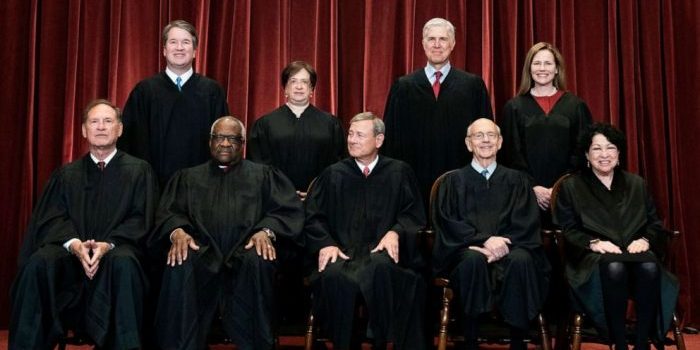
The Center Square reports that in June the Supreme Court affirmed a broad reading of birthright citizenship in a case it identifies as Trump v. Barbara. According to the outlet, Chief Justice John Roberts stated that the phrase “subject to the jurisdiction thereof” refers to the United States’ power to govern anyone living in its territory. The 14th Amendment’s text provides that “all persons born or naturalized in the United States, and subject to the jurisdiction thereof, are citizens of the United States.”
The Center Square framed the webinar amid efforts by the Trump administration to curb “birth tourism.”
Hamilton attacks the decision’s grounding
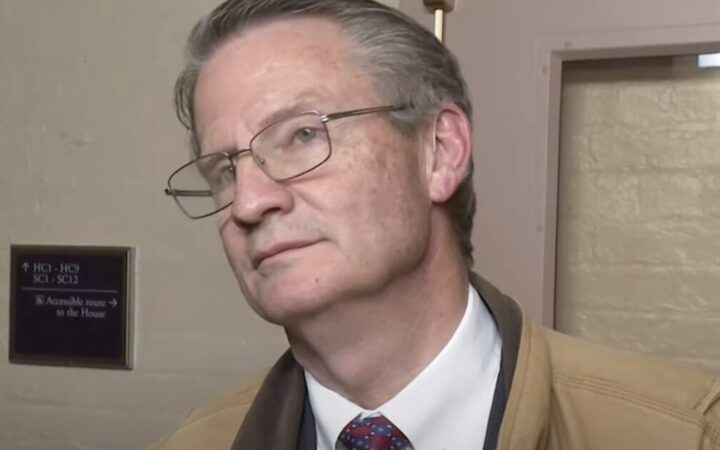
Gene Hamilton, president of the America First Legal Foundation, argued the Court’s ruling departed from originalism. “This was an outcome-oriented decision, in my opinion. This is not a decision that was actually grounded in originalism,” Hamilton said. “It’s not a decision that was grounded in anything other than wanting to avoid an awkward political outcome by certain members of the Court.”
Questioning the majority’s view of jurisdiction, Hamilton added: “[I]t’s weird to me — to put it bluntly — to consider someone being subject to the jurisdiction thereof as implying simply that their mere presence in the United States…means that [they] are a member of the body politic, and [their] children should be citizens, and that there is nothing that could ever change that.”
Menashi offers a counter
U.S. Court of Appeals Judge for the Second Circuit Steven Menashi disagreed with Hamilton’s critique. As The Center Square recounts, Menashi said “to understand a rule that is fixed to apply differently under different circumstances is not really an odd result or non-originalist in any way.” Drawing an analogy, he added, “We say the Second Amendment doesn’t just apply to muskets, and so it might also be that the principle in the [citizenship] clause doesn’t only apply to the categories to which it applied at the time.”
A shared lane for Congress
Despite their disagreement on interpretation, both guests outlined ways lawmakers could test the Court’s holding. Menashi suggested that “if the circumstances under which somebody receives citizenship can’t be limited, then maybe Congress or the executive branch might try to reclaim some of the authorities about regulating citizenship.” He added, “And that’s not inconsistent with Barbara, right? Because Barbara is just about who receives citizenship. It’s not about the degree to which citizenship could be regulated once conferred.”
Hamilton argued Congress could put a new case before the justices: “[A]ll that we need is a vehicle to get before the Supreme Court to get them to reconsider the decision. Congress could still pass a law…and ultimately, that’s just going to cue up another case or controversy for the Supreme Court to adjudicate and decide. But Congress still ultimately has the power to do whatever it wants.”
The numbers cited
The Center Square cites estimates from advocacy groups on the scale of births involved. As of 2017, about 4.5 million children under 18 born to illegal immigrants were living in the U.S., according to the Federation for American Immigration Reform. The Center for Immigration Studies estimated 225,000 to 250,000 such births in 2023.
What to watch
According to both speakers, any congressional attempt to redefine or regulate aspects of citizenship would likely be designed to prompt a new Supreme Court test of the 14th Amendment’s scope, as described by The Center Square.